
From Diesel to Solar: A Smarter Energy Model for Humanitarian Operations
Across the humanitarian sector, the pressure to deliver life-saving assistance is colliding with two urgent realities: the impacts of climate change and increasingly constrained funding. Organizations are being challenged to deliver more, faster, and with reduced resources, often in some of the world’s most remote and fragile environments. One of the most significant and timely shifts addressing this issue is the transition from diesel-dependent energy systems toward clean, reliable, and financially sustainable solar power solutions.
For UNHCR, the UN Refugee Agency, energy is a vital necessity for protection, service delivery, community and staff safety. Operations are required to operate 24/7, often in remote, off-grid areas distant from reliable infrastructure. Traditionally, diesel generators have been used to bridge this gap; however, they come with significant disadvantages such as fluctuating fuel costs, logistical complexities, environmental impact, and long-term financial inefficiency.
A smarter energy approach for humanitarian assistance
The Green Financing Facility (GFF) has been developed with the support of the Swedish International Development Cooperation Agency (Sida), the German Federal Ministry of Economic Cooperation and Development (BMZ) and the IKEA Foundation. This model transforms how investments in energy are used. Instead of one-time, capital-heavy procurement, the same donor funds can be recycled across multiple sites through a centrally managed leasing facility—delivering more solar systems for the same level of funding, with better oversight, accountability, and sustainability.
At its core, the approach delivers a full-service solarization package through in-house experts, covering feasibility, design, procurement, and long-term operation and maintenance. A five-year internal leasing mechanism removes the need for large upfront capital, spreads costs over time, and guarantees performance throughout the system lifecycle—addressing a key aid-sector challenge by advancing sustainability without diverting scarce operational funds from frontline delivery.
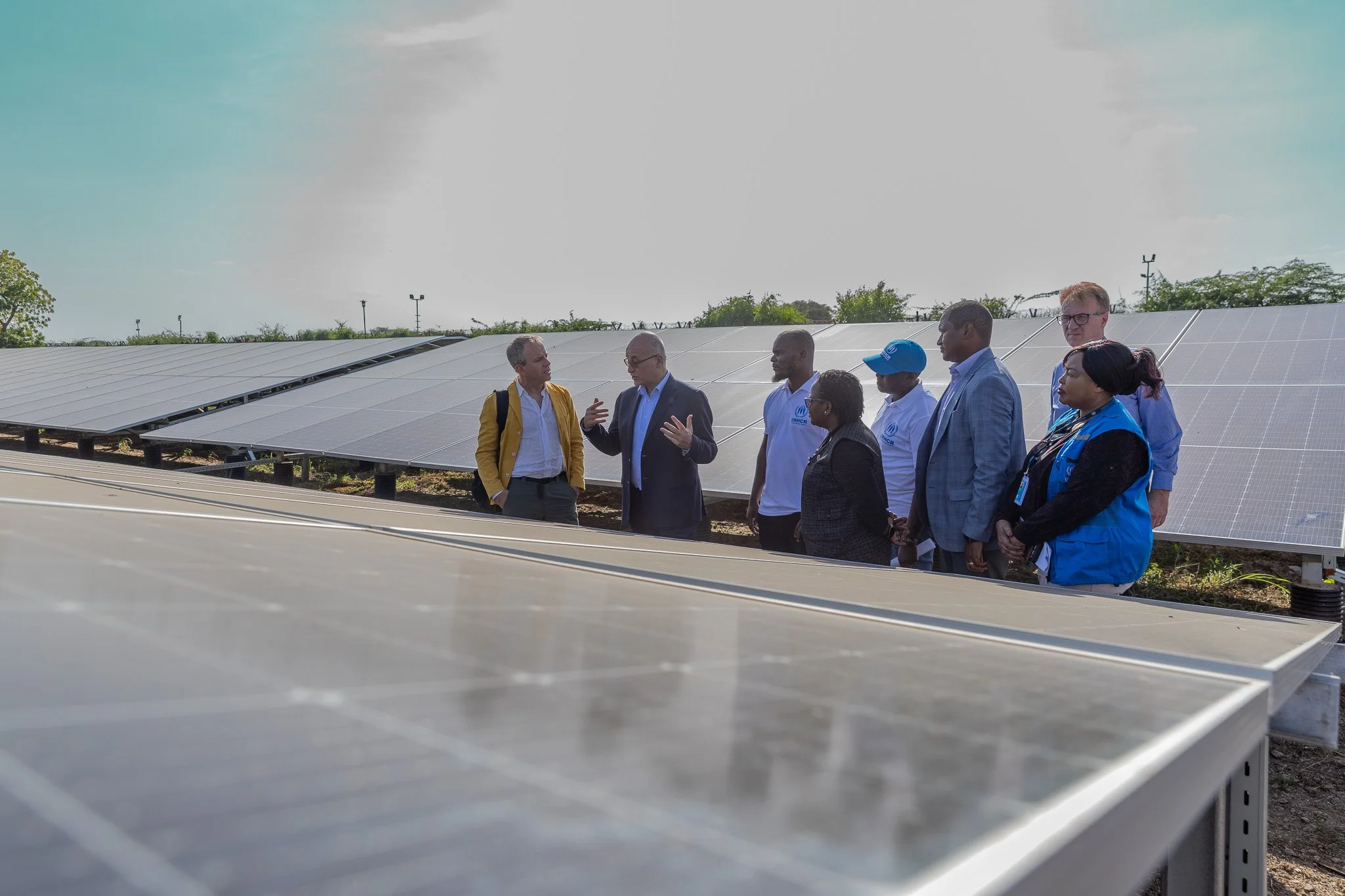
11 January 2026, Kenya. UNHCR Barham Salih in Kakuma municipality for his inaugural visit as High Commissioner. ©UNHCR/ Eric Bakuli.
Maximizing impact in remote and fragile settings
UNHCR’s operations are often located in environments where energy access is unreliable or unavailable. Solar power offers an effective solution, reducing fuel dependence and supply interruptions while enhancing operational continuity. The results are tangible: solarized offices are expected to reduce building-related carbon emissions by around 65 percent, while reaching financial savings on average of 15 - 20 percent, depending on country context and site-specific conditions.
Equally essential, the leasing model transforms how donor resources are used by shifting from one-off, single-site investments to a centrally managed facility that reinvests funds across multiple locations over time, strengthening governance and accountability while ensuring long-term sustainability. In a context where every donor contribution must stretch further, this approach ensures renewable energy investments deliver maximum value—both financially and environmentally.
Advancing the SDGs through a scalable clean energy model
Currently in implementation across 40 UNHCR sites in 14 countries and expanding rapidly, the Green Financing Facility embeds progress toward the Sustainable Development Goals directly into humanitarian operations. By delivering affordable and clean energy, it reduces reliance on fossil fuels and strengthens operational continuity in remote and fragile contexts, while advancing climate action through lower emissions and promoting responsible consumption via long-term efficiency, maintenance, and accountability.
As humanitarian needs continue to rise and financial constraints tighten, the Green Financing Facility offers a pragmatic approach to achieving greater impact with limited funds. Its innovative financing structure and scalable design enable more resilient and efficient operations. In doing so, it demonstrates how humanitarian organizations can align climate commitments, operational efficiency, and responsible resource management, reinforcing the role of partnerships in delivering sustainable, system-wide change.
Thank you to UNHCR for submitting this article for our blog.
If you are interested in writing an article for our blog, please contact phoebe.frewin@aid-expo.com for more information.